Share It On:
 Navigating complex regulations doesn't have to be a total headache if you pick the best SDLC models for healthcare software development.
Why Does Choosing The Right SDLC Matter In Healthcare?
In most industries, a software bug is an "oops." In healthcare, a bug is a liability. Whether you're handling sensitive patient data or building a diagnostic tool, SDLC in healthcare industry contexts demands a level of precision that other sectors just don't face.
The right framework ensures you aren't just shipping code, but building a secure SDLC. You’ve got HIPAA, GDPR, and SaMD (Software as a Medical Device) regulations breathing down your neck. If your process is messy, your compliance will be too.
Choosing a solid SDLC model for healthcare helps manage these risks early on, ensuring that security isn't just an afterthought but baked into the very DNA of the project. Plus, with the rise of AI, your model needs to be flexible enough to handle complex algorithms while staying rigid enough to pass a rigorous audit.
Types of SDLC models
Picking the right framework for your project is the most important decision you'll make in the early stages. Here is a deeper SDLC models comparison for healthcare to help you navigate the options.
1. The Waterfall Model
The Waterfall model operates on a strictly linear, sequential path where you can't start the next phase until the previous one is totally finished. While it feels a bit dated to some, its heavy emphasis on upfront requirements and meticulous documentation makes it a solid choice for fixed-scope healthcare projects where regulatory audits are a primary concern and necessity. It provides a very clear, predictable roadmap for everyone.
| Pros | Cons |
|---|---|
| Crystal clear requirements from day one. | Extremely rigid; changes are a nightmare. |
| Easy to document for regulatory audits. | No working software until the very end. |
| Predictable timelines and budgets. | High risk if the initial plan had flaws. |
2. The Agile Model
Agile is the go-to for teams that need to move fast and pivot often. It breaks the development process into short, manageable "sprints," allowing for constant feedback and rapid updates. This flexibility is great for patient-facing apps that need to stay current with software development trends. However, it requires a lot of discipline to ensure that documentation doesn't get lost in the shuffle of high-speed, constant delivery.
| Pros | Cons |
|---|---|
| Highly flexible and responsive to feedback. | Can lead to "scope creep" if not managed. |
| Continuous delivery of functional modules. | Documentation can sometimes take a backseat. |
| Great for integrating evolving AI features. | Harder to predict the final "end" date. |
3. The V-Model
Often cited as the best software development model for healthcare, the V-Model focuses heavily on verification and validation. Every single development stage has a corresponding testing stage, creating a "V" shape that ensures quality is baked in from the jump. It’s a bit rigid, but if you’re building high-stakes medical devices, the peace of mind from its rigorous testing is totally worth the extra effort and time.
| Pros | Cons |
|---|---|
| Massive emphasis on quality and accuracy. | Just as rigid as the Waterfall model. |
| Errors are caught early in the lifecycle. | Not great for complex, evolving projects. |
| Perfect for high-stakes medical device software. | Higher initial time investment in planning. |
4. The Spiral Model
The spiral model in healthcare projects is essentially the "risk-manager's dream." It works in loops, or spirals, where each pass involves a heavy dose of risk assessment before moving to the next iteration. It’s incredibly flexible and allows for massive complexity, but the downside is that it can get pretty pricey and requires a team that really knows how to navigate high-level risk management strategies and cycles.
| Pros | Cons |
|---|---|
| Excellent risk management and control. | Can be quite expensive to implement. |
| Accommodates changes at any stage. | Requires highly specialized risk expertise. |
| Good for large-scale, high-risk systems. | The process can be time-consuming. |
5. The Iterative Model
Iterative model approaches building your software in layers. You start by developing a core version of the product, testing it, and then adding more features in subsequent cycles. This allows you to get a working version out into the world much faster than traditional methods. It’s great for refining complex healthcare algorithms over time, though it does require a very strong, initial technical architecture.
| Pros | Cons |
|---|---|
| Early visibility of a working product. | Requires a very strong initial architecture. |
| Flexible and adaptive to requirements change. | Each iteration phase is rigid within itself. |
| Lower risk of total project failure | Can be resource-intensive over many cycles |
6. The Big Bang Model
The Big Bang model is essentially "coding on a whim." There’s very little planning involved—you just throw resources at the project and hope for the best. While it might work for a tiny, non-critical research project, it’s a total "no-go" for the SDLC in healthcare industry. Without a structured plan or documentation, you’re basically asking for a regulatory nightmare and a failed software launch.
| Pros | Cons |
|---|---|
| Minimal planning or management needed. | Extremely high risk of non-compliance. |
| Very few resources required upfront. | Zero documentation for regulatory audits. |
| Total flexibility for the developer. | Worst choice for large or ongoing projects. |
Which SDLC Model is Ideal for Healthcare?
If you’re looking for a straight answer, here’s the tea: there isn’t a single "perfect" one. It’s more about the "sweet spot" for your specific project.
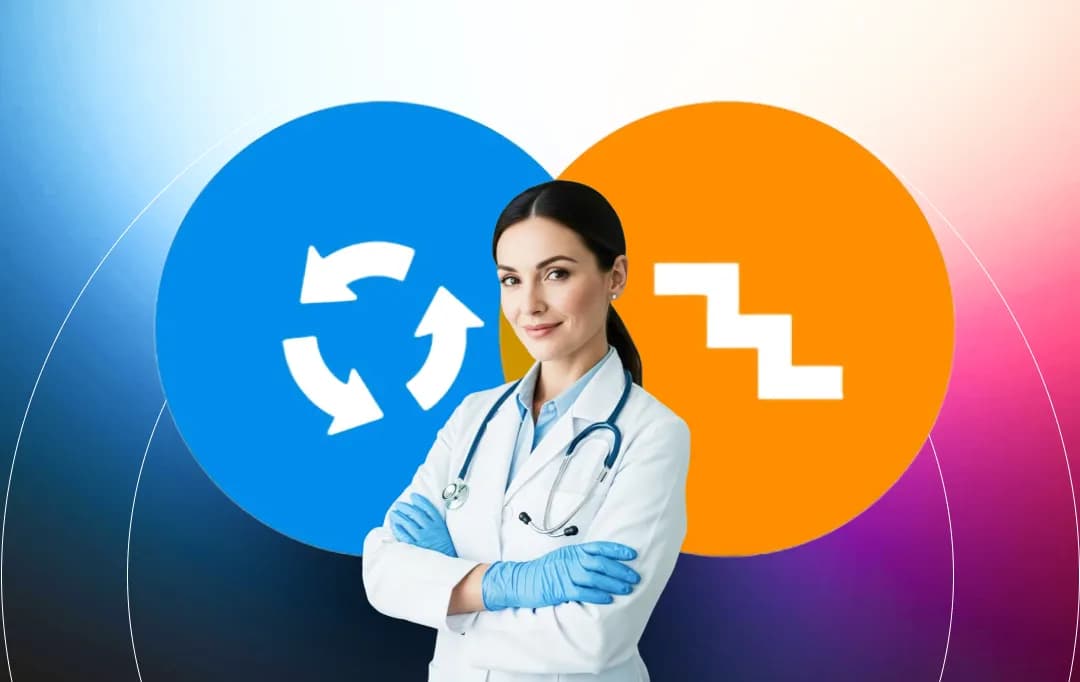
When we look at agile vs waterfall in healthcare software development, Waterfall is great for fixed-scope compliance projects, while Agile is better for patient-facing apps that need constant updates. However, for most serious health-tech ventures, the V model in healthcare software development is the gold standard because it prioritizes verification at every step.
That said, if you’re trying to build something truly innovative, a hybrid SDLC model for healthcare is often the real winner. It allows you to use the structured, documented approach of the V-Model for the core "regulated" parts of your app, while using Agile sprints for the UI/UX and front-end features.
Deciding which SDLC is suitable for healthcare projects ultimately depends on whether you're building a simple wellness tracker or a complex hospital management system.
Cost Comparison Tables
When you're trying to figure out which model to choose, the "sticker price" isn't the only thing that matters. You have to look at the long-term financial impact of each choice.
Table 1: Initial Investment vs. Management Overhead
| SDLC Model | Cost of Changing Requirements | Cost of Late-Stage Bug Fixes | Risk of Compliance Fines |
|---|---|---|---|
| Waterfall | Extreme | Very High | Low (if planned well) |
| Agile | Low | Medium | Medium (due to docs) |
| V-Model | Very High | Low (caught early) | Very Low |
| Spiral | Medium | Low | Low |
| Iterative | Medium | Medium | Medium |
| Big Bang | Impossible to Calculate | Catastrophic | Guaranteed High |
Table 2: The "Hidden" Costs of Failure & Change
| SDLC Model | Cost of Changing Requirements | Cost of Late-Stage Bug Fixes | Risk of Compliance Fines |
|---|---|---|---|
| Waterfall | Extreme | Very High | Low (if planned well) |
| Agile | Low | Medium | Medium (due to docs) |
| V-Model | Very High | Low (caught early) | Very Low |
| Spiral | Medium | Low | Low |
| Iterative | Medium | Medium | Medium |
| Big Bang | Impossible to Calculate | Catastrophic | Guaranteed High |
Typical Process Every SDLC Model Follows
No matter which path you take, the journey generally follows a specific set of milestones. Here’s a breakdown of the typical workflow.
1. Requirement Analysis: The Blueprint
This is the "look before you leap" phase. You sit down and define exactly what the software needs to do. In healthcare, this means identifying every HIPAA requirement and security protocol. If you mess this up, the whole house of cards falls down later.
2. System Design: The Architecture
Now you move from "what" to "how." Designers and architects map out the technical stack, database structures, and user interface. You’re basically drawing the map before the devs start driving. A solid design here prevents massive technical debt later on.
3. Development/Coding: The Grind
This is where the actual building happens. Developers take the design and turn it into functional code. With the rise of AI in software development, many teams use automated tools to handle repetitive code, but human oversight remains non-negotiable for clinical accuracy.
4. Testing & Quality Assurance: The Stress Test
In healthcare, this is the most critical step. You aren't just checking if a button works; you're ensuring patient data is encrypted and the system doesn't crash during a medical emergency. Penetration testing and rigorous validation are the keys to a secure SDLC for healthcare software.
5. Deployment: The Launch
Time to go live! This is often done in stages—perhaps a beta launch in a single clinic before rolling it out globally. It’s the moment of truth where your software meets real users in a real-world clinical environment.
6. Operations & Maintenance: The Upkeep
The job isn't done just because the app is in the store. You need constant monitoring, security patches, and updates to keep up with changing laws and new medical tech. It’s a continuous loop of improvement and safety checks.
Frequently Asked Questions
What are the best SDLC models for healthcare currently?
The most reliable options are the V-Model for its strict validation and Agile for its flexibility. Many modern firms now prefer a hybrid SDLC model for healthcare to balance regulatory compliance with the need for rapid, iterative updates.
How does Agile vs Waterfall in healthcare software development compare?
Waterfall is highly structured and great for documentation-heavy regulatory requirements but lacks flexibility. Agile allows for faster releases and better user feedback integration, making it better for modern apps, though it requires more discipline to keep documentation up to par.
Why is the V model in healthcare software development so popular?
The V-Model is a top SDLC model for healthcare because it pairs every development phase with a specific testing phase. This ensures that errors are caught early, which is vital for maintaining patient safety and meeting strict industry standards.
How is AI in software development changing healthcare SDLC?
AI is accelerating the best SDLC model for healthcare software development by automating bug detection and code generation. It helps developers maintain high security standards while keeping up with fast-moving software development trends without sacrificing the necessary human oversight.
Which SDLC is suitable for healthcare projects with high-risk factors?
For high-stakes projects, the spiral model in healthcare projects is often preferred. It focuses heavily on risk analysis in every cycle, ensuring that potential failures are identified and mitigated before the project moves into expensive, late-stage development phases.

Uncover executable insights, extensive research, and expert opinions in one place.
Related Content