Share It On:
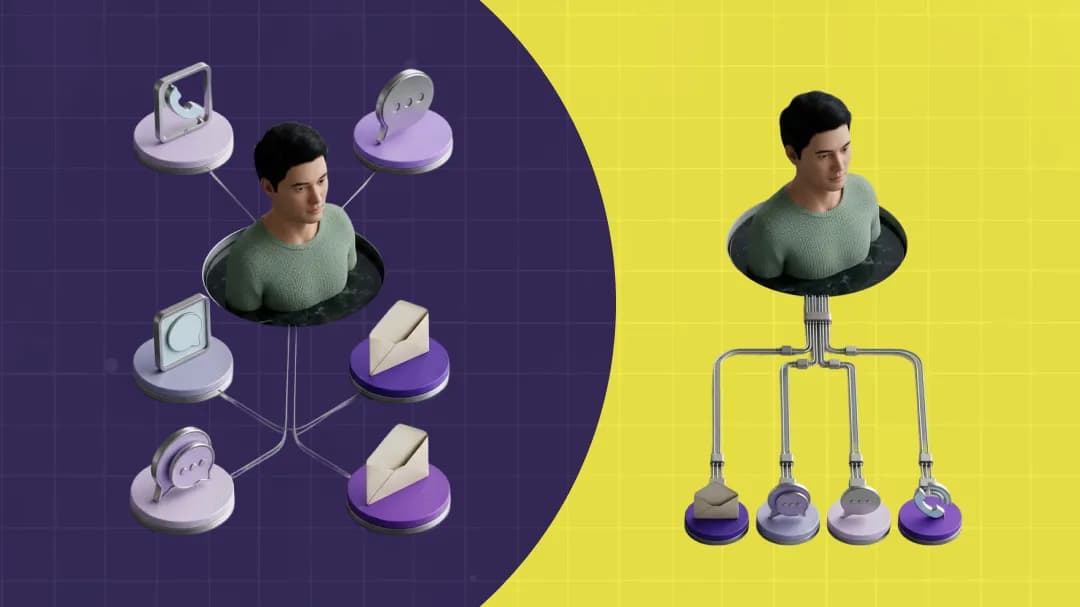 Being everywhere isn’t enough; how your channels work together defines the experience. Explore omnichannel vs multichannel marketing, with examples, benefits, and practical insights to help you decide.
Instagram reels, meta advertisements, internet relationship management: these are not buzzwords, but a major way brands stay relevant in the present market. With the number of internet users surpassing six billion, it becomes crucial for any brand to maintain an online presence.
However, the majority of people become lost at this stage: it is one thing to have your brand everywhere but another thing to have your brand everywhere in a meaningful sense. And that leads to one of the issues that any online business encounters at some point: the dilemma of omnichannel vs. multichannel marketing.
One of them is how to be accessible in a large number of places simultaneously and the other is how to ensure that the places are actually integrated to ensure that your customer does not need to repeat themselves.
The choice you make has a direct influence on how customers view your brand, and it is necessary to understand the difference between these two approaches.
What is Multichannel Marketing and Omnichannel Marketing?

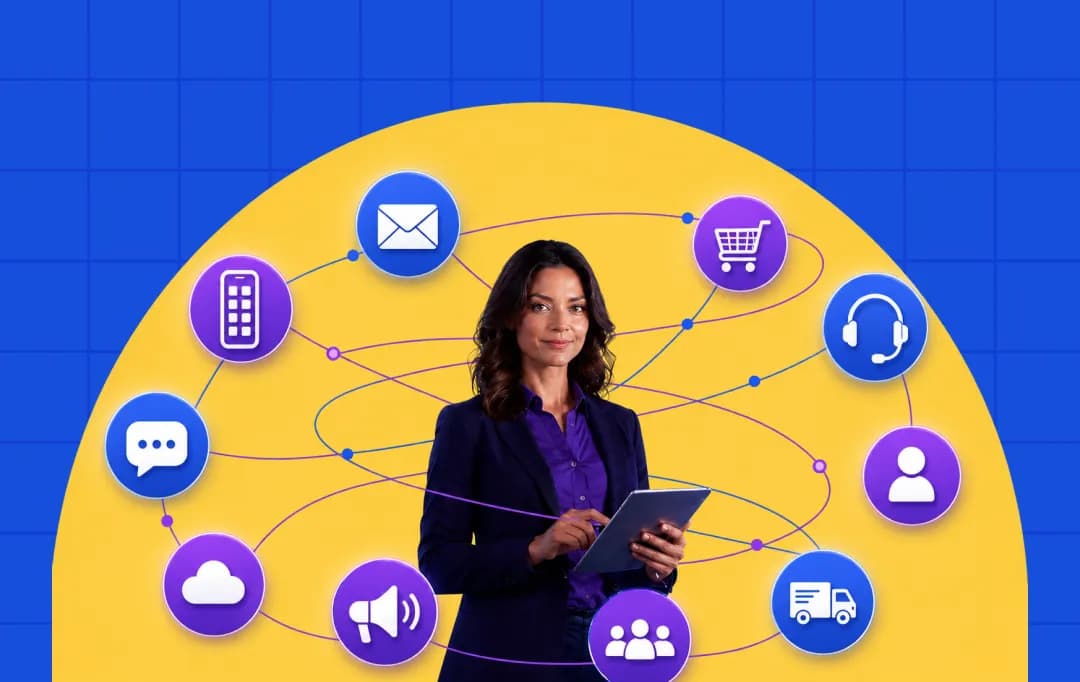
Omnichannel marketing allows companies to create one consistent brand narrative, regardless of the devices or platforms it is accessed on. The company data should have the same messaging between the site, mobile app, and physical stores. This level of coordination is difficult to attain, but it is possible to achieve these results with the assistance of the best digital marketing companies. It becomes possible with the coordination of data, technology, and messaging across touchpoints to ensure an appropriate flow, which is exactly how the omnichannel approach works. Additionally, it helps boost brand recall value.
Conversely, brands with the multichannel marketing approach are concerned with being seen in as many channels as they can, so as to maximize visibility. This implies the use of various channels such as email, social media marketing, and advertisements as individual tools. When each platform has its own set of rules and objectives, the outcome in user experience may seem disjointed or monotonous. Reach is great, but the connections are not very deep. It is not about a constant conversation but being heard in numerous locations.
What are the Similarities Between Omnichannel and Multichannel Marketing?
It would be a good idea to recognize their overlap before delving into the difference between omnichannel and multichannel. The two methods are founded on the same general premise, which is to reach customers at various touchpoints. It could be email or social media or websites or mobile applications, but the idea is to remain available wherever your audience is.
They also have a similar goal: to generate engagement and conversions. In both situations, the brands are trying to move users down the marketing funnel, and across several platforms, they can influence users' decisions. It is this common base that can confuse omnichannel vs multichannel marketing at first sight.
When You Should Consider the Use of Multiple Channels
In essence, both types of digital marketing: multichannel and omnichannel are based on interactions with customers on a variety of platforms. This may be websites, mobile apps, social media, email and even offline touchpoints. The concept is not very complicated: you just need to go to customers where they are. With either a formal cross channel marketing operation or a freestanding campaign, both strategies increase brand awareness in the digital landscape.
In addition to presence, the two solutions are aimed at attracting, engaging, and converting users at varying funnel stages. Although the implementation process might vary, the objective has always been to create meaningful interactions that will lead to business results.
While these similarities set the stage, the real distinction becomes clear when you compare how each strategy operates in practice.
Key Differences Between Omnichannel and Multichannel Marketing

With this groundwork in place, it is simpler to dissect the way in which these strategies differ. The omnichannel vs multichannel approach is not a matter of the number of channels, but the interplay between the channels.
| Basis of Distinction | Omnichannel Marketing | Multichannel Marketing |
|---|---|---|
| Core Approach | Unified and integrated ecosystem | Independent and separate channels |
| Customer Experience | Fluid, unbroken, and seamless | May be incoherent or monotonous |
| Data Usage | Centrally coordinated among touchpoints | Stored in silos within each channel |
| Primary Focus | The overall customer experience | Implementation and coverage of the channel |
| Inventory Visibility | Live updates across all platforms | Managed individually by each department |
| Message Personalization | Highly specific, based on previous behavior | Generalized messaging based on platform |
| Internal Organization | Cross-departmental collaboration | Departments work separately |
| Success Metrics | Customer Lifetime Value (CLV) | Channel ROI and engagement |
| Typical Outcome | Long-term loyalty and frictionless experience | Strong awareness but lower retention |
Since we have discussed the similarities and differences between omnichannel marketing and multichannel marketing, let's check out both the advantages and disadvantages of each.]

Pros and Cons of Omnichannel vs Multichannel Marketing
To determine which approach is best between the omnichannel vs multichannel strategy, it is easier to assess the performance of each in real-life situations. The two methods have a number of unique benefits yet they also have trade-offs that can affect the implementation and results.
Multichannel Marketing Benefits
- Increases brand awareness using various platforms.
- Less complex to apply and does not need extensive integration.
- Enables channel-specific optimization according to audience actions.
- Provides scalability and testing capabilities of individual campaigns.
- Provides fast payoffs, particularly to businesses with reach orientation.
Multichannel Marketing Disadvantages
- Data is still isolated on platforms, preventing in-depth insights.
- There can be inconsistent messaging across channels.
- Customer experience can be disjointed or monotonous.
- Personalization is not as broad as integrated methods.
- More difficult to sustain the continuity of the customer journey.
Omnichannel Marketing Benefits
- Delivers a coherent and integrated customer experience in touchpoints.
- Allows more personalization with integrated data and customer journey maps.
- Enhances retention, loyalty, and retention.
- Enhances uniformity with good cross channel marketing.
- Practices proven omnichannel marketing outcomes such as increasing customer lifetime value.
Omnichannel Marketing Disadvantages
- Needs sophisticated tools, integration, and data infrastructure.
- Increased complexity of operations and investments.
- Aligns the demands between teams and departments.
- It is time-consuming to implement and particularly in a growing business.
- Constant monitoring and updates are necessary to achieve continuous optimization.
Real-life Examples of Omnichannel and Multichannel Marketing
The difference becomes much more apparent with the strategies in action. Let’s check how these digital marketing strategies work in a real-life setting.
Apple’s Multichannel Marketing Approach for Product Launches

Apple is a good example of how multichannel marketing should be used, and in particular when launching a product. As soon as the new iPhone is launched, the campaign is visible everywhere simultaneously: high-impact TV commercials, polished Instagram ads, and large-format billboards, as well as targeted email campaigns.
All these channels are programmed to work separately. Though the branding remains the same, the execution is platform-specific, not extensively integrated. In the example of a user visiting the site, he or she will not cause a coordination of other channels in real time.
The idea is evident: to maximize exposure and achieve a powerful recall effect by exposing a customer to the same message multiple times, as opposed to developing a constantly connected customer experience.
Starbucks Rewards Seamlessly Delivered Through Omnichannel Marketing

Starbucks is one of the best examples of omnichannel integration. Its rewards program is one that links both digital and physical contacts into one single cohesive experience.
Customers are able to check their balance over the internet, to load funds via the mobile app, and to pay in-store, whilst their reward points update in real-time across all platforms. Even interventions such as mobile ordering are smoothly incorporated, as stores pre-prepare the orders and the receipts are provided immediately.
The outcome is a system in which the online and offline experiences are completely integrated so that the whole journey seems to be seamless, coherent, and stress-free.
The Best Marketing Approach to use in your Business
Deciding between omnichannel and multichannel isn't about which is "better" in a vacuum; it’s about your current resources, your industry, and your customers' expectations.
When Multichannel Marketing Should Be Selected
It is usually the correct step to opt for multichannel marketing in the case of startups or smaller companies that are focused on quick expansion and brand recognition. The following factors should be “why” you pick multichannel marketing:
The right choice to make in the instance of startups or smaller businesses that are concentrated on rapid growth and brand recognition is most often to choose multichannel marketing. The following factors should be “why” you pick multichannel marketing:
- Low Resources: You lack the resources so far to make the costly CRM integrations or the costly data orchestration systems.
- Short Sales Cycle: When you sell a one-off product (such as a novelty gift) that the customer cycle is short and to the point.
- First Market Testing: You would like to know what social networks will be the most popular with your audience and would then invest in a massive integration.
When Omnichannel Marketing is the Right Choice.
It is the alternative that the established brands resort to when they are interested in maximizing the existing customer base. Here’s when a company should consider the omnichannel approach.
- High Competition: When you are in a saturated market (such as Fashion or SaaS) where customer loyalty is the main competitive edge.
- Complex Journeys: Your customers typically have 5-10 touchpoints with you (browse, compare, read reviews, etc.) before being able to make a purchase.
- Data-Readiness: You already have a centralized CRM and a team, which can handle cross-departmental workflows.
But despite having a clear roadmap, most businesses begin to falter at the implementation stage. Let’s check the best practices to help you get through these hurdles.
| You might also like: Grow Your Business the Right Way With These Key Marketing Strategies
Best Practices for Successful Implementation
Whether you’re working on setting an omnichannel approach or a multichannel approach, it pays to follow the proven best practices.
Best Practices for Multichannel Marketing
In order to make multichannel marketing a successful strategy, you do not have to be everywhere; you need to be where it counts. The following is how to build yourself on the channels that you do choose:
- Channel Selection and Prioritization: Be as your customers are, not as trends are. LinkedIn and email will suit a B2B brand better than dispersing effort across all the social platforms.
- Platform-Specific Optimization: Optimize each channel uniquely. The content that works on Instagram may not necessarily be effective in email or search ads. Adjust creatives, imitate, and formats.
- Defined Objective per Channel: Designate a purpose to each channel: awareness, engagement or conversion. Do not attempt to make each channel do anything.
- Independent Performance Tracking: Track ROI, engagement, and conversions per channel. This assists in determining the platforms that should be allocated more budget and those that should be dropped.
- Consistent Branding (Not Execution): Have the same visuals and tone, but have flexibility in content delivery channels.
- Agile Budget Allocation: Rapidly allocate budgets on the basis of performance. Multichannel is best used in a situation where you can test, learn, and reallocate immediately.
- Consistent Testing and Refinement: Keep on testing creatives, messaging and audience segments in every channel to enhance their effectiveness overtime.
Best Practices of Omnichannel Marketing.
Omnichannel success relies on the smoothness of the back-end since that is what makes the whole experience a whole.
- Data Unification and Integration: Integrate CRM, the site, app, and marketing tools to create a single customer view. All the interactions ought to feed into a single system.
- Real-Time Data Syncing: Keep customers updated on their activities, such as browsing, purchases, or preferences changes, across all touchpoints in real-time.
- Journey Mapping: Map customer movement across channels not how you think they should. Determine the main transitions and remove friction points.
- Behavior-Based Customer Profiling: Go beyond demographics. Utilize behavioral data to comprehend intent and create experiences based on it.
- Coherent Messaging with Context: Have a consistent narrative, but tailor messaging to the point the user is in their experience. No redundant or unnecessary messages.
- Cross-Channel Personalization: Take prior experiences and use them to shape future experiences- what a user views on the website should be reflected in email or advertisements.
- Technology Enablement (CRM, Automation, AI): Automate workflows and manage data and scale personalization without manual bottlenecks using integrated tools.
If you have an app, you should also check out the proven tips to market it successfully in an omnichannel environment here.
How to Transition from Multichannel to Omnichannel Marketing
If you’ve already established a brand presence and wish to shift your focus to customer experience, it’s time to move from multichannel marketing to the omnichannel approach.
However, moving to a cohesive experience does not occur in one day. So here’s how you get started with the process:
- Audit Your Touchpoints: Determine which points in your journey the breaks occur. (e.g., Can a customer make a purchase online and pick it up in the store?
- Unify Your Information: Abandon email and social media spreadsheets. Invest in Single Customer View (SCV).
- Map the Journey: Rather than strategizing the email campaign, strategize the customer path, and determine which channels can support the customer path.
With a clearer path toward integration, it becomes easier to evaluate where your brand stands and what approach will deliver the most value.
Conclusion: Visibility vs. Vitality
The confusion most brands have between omnichannel and multichannel marketing isn't about choosing a "winner," it’s about choosing the right tool for your current stage of growth.
If your goal is to cast a wide net, build rapid brand awareness, and test new markets, multichannel marketing provides the agility and reach you need to get noticed. However, if you are looking to build a "moat" around your brand through deep customer loyalty and a frictionless user experience, omnichannel marketing is the gold standard.
The bottom line is to figure out how to not just be everywhere, but exactly where your customer needs you to be, with the right information at the right time. That is the secret to a journey that doesn’t just end in a sale, but in a lifelong brand advocate.
Frequently Asked Questions
What is the difference between omnichannel and multichannel marketing?
The distinction between the omnichannel and multichannel lies in integration. Multichannel marketing aims at leveraging multiple platforms and operating them independently to reach as many people as possible, whereas omnichannel marketing ties the multiple platforms together in a single entity. This guarantees a seamless customer journey mapping with data and interactions being smooth throughout all touchpoints rather than being isolated.
What is omnichannel marketing and how do they enhance the user experience?
It is a customer-focused approach whereby all the channels are tied in real time. Through an omnichannel marketing strategy, activities such as adding items to a cart are synchronized across devices and even in-store experiences. This will provide a smooth, uninterrupted experience that will minimize friction, enhance convenience, and increase trust and brand memory.
What is multichannel marketing and its advantages?
It involves a plan involving several channels of reaching the customers that are independent. Although it is not integrated, the advantages of multichannel marketing are low cost, simple to establish, and quicker to implement. It is ideal in startups or expanding businesses that wish to experiment with platforms, develop presence, and expand rapidly without investing in a sophisticated platform.
Which are the most typical omnichannel versus the multichannel in the real world?
Examples of common omnichannel vs multichannel are Apple and Starbucks. In launches, Apple applies the multichannel marketing strategy, driving forward a uniform message on TV, social and advertisements. Instead, Starbucks employs an omnichannel strategy, by which its app, website, and stores are interconnected, thus forming a coherent and seamless customer experience.
What are the most important benefits of omnichannel marketing over multichannel?
Omnichannel marketing advantages are long-term oriented. Through retention, personalization, and Customer Lifetime Value (CLV) enhanced by remaining consistent through the use of cross channel marketing. Conversely, the benefits of multichannel marketing are more immediate and will assist brands to raise awareness, channel tests as well as jump-start rapid acquisition without deep integration.
What is the appropriate omnichannel or multichannel strategy to use in my business?
The decision between an omnichannel and a multichannel strategy can be based on your resources and objectives. Opt for multichannel if you need quick growth, have limited infrastructure, or a short sales cycle. Select omnichannel when you are established, compete in a market and desire to enhance retention with intertwined, multi-touchpoint customer experiences.
Why is customer journey mapping important for cross channel marketing?
Customer journey mapping is the key to successful cross channel marketing since it will help to understand the flow of users across platforms. It assists in determining where there would be gaps, overlaps and friction points in the experience. Knowing this, companies will be able to better coordinate channels and will be able to shift toward less fragmented multichannel mix to an unbroken omnichannel experience.

Uncover executable insights, extensive research, and expert opinions in one place.
Related Content