Share It On:
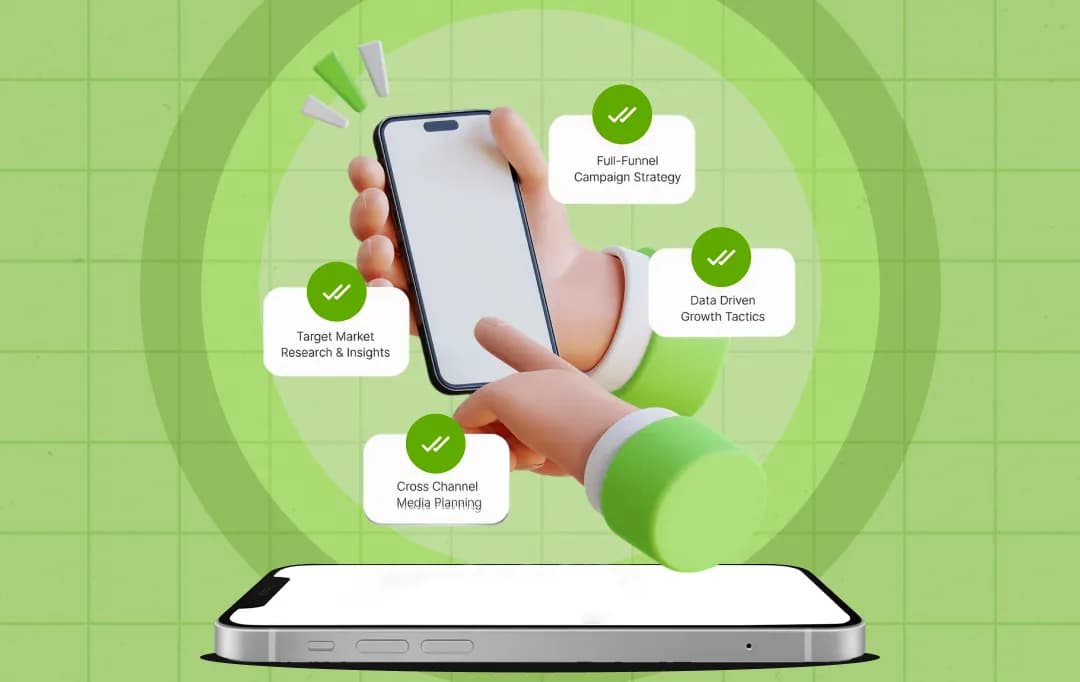 Master the synergy between paid vs organic marketing with high-impact, data-driven growth strategies designed for 2026 founders.
Handling the messy reality of paid vs organic marketing for mobile apps is usually the difference between a top-chart success and a ghost town on the App Store. Whether you’re a bootstrapped founder or leading a growth team, you need a playbook that doesn't just "chase" users but actually keeps them. Let’s dive into how you can lay a foundation that lasts while using ads to pour gasoline on the fire.
Organic App Marketing: Building Your Digital Foundation
Think of your organic strategy as the "soul" of your app. If you don't have this right, you’re just a ghost in the machine. Organic mobile app marketing is about building a presence that lives and breathes without a constant infusion of cash.
1. Master the New Age of ASO
App Store Optimization isn't just about high-volume keywords; it’s about semantic relevance. You need to optimize for how people talk to their AI assistants. Your organic app growth tactics must include descriptive, natural language that tells the store exactly who your user is.
2. The Power of "Social Proof" Loops
Ratings and reviews are your lifeblood. But don't just wait for them. Use in-app prompts at "moments of delight"—like right after a user completes a task. High ratings are the best marketing for mobile apps because they act as a massive "Trust Me" sign for new visitors.
3. Content That Actually Lives Outside the Store
You can't just stay inside the app store. Use blogs, short-form videos, and niche forums to drive "external" organic traffic. When the stores see users coming from outside links, your authority scores go through the roof.
4. Leveraging AI for Asset Optimization
Use AI in marketing to A/B test your screenshots and icons before they even go live. Predictive heatmaps can show you exactly where a user’s eye lands. If your "Download" button isn't in the "hot zone," you're leaving installs on the table.
5. Community: The Ultimate Retention Tool
Organic growth thrives in the "dark social" corners—WhatsApp groups, Discord, and Slack. By fostering a community where users solve each other's problems, you're building a moat that paid advertising for mobile apps simply cannot touch.
6. Video-First "Discoverability"
In 2026, your app’s preview video is your 30-second elevator pitch. It needs to be fast-paced, high-energy, and show the value immediately. This is one of those Marketing strategies that bridges the gap between a "maybe" and a "download."
Paid App Marketing Is The Accelerator for Growth
If organic is your foundation, paid advertising for mobile apps is rocket fuel. You use it when you’ve found a "winning" formula, and you want to show it to the world—fast.
1. Choosing the Right Platforms
Not all mobile app advertising platforms are created equal. You have to go where your tribe hangs out. Whether it’s high-intent search ads or visual-heavy social feeds, your choice depends on whether your app solves a problem (Search) or fulfils a desire (Social).
2. High-Octane Creative Testing
The "Big Secret" of 2026? Creative is the new targeting. Since privacy laws have limited how much data we can see, your ad creative has to do the heavy lifting. Run 10 different versions of an ad and let the AI in marketing algorithms figure out which one clicks.
3. Influencer Partnerships: Paid but Personal
Paying a creator to talk about your app isn't just a "shoutout"—it's a tactical strike. These marketing strategies work because they bypass the "ad blindness" most users have. It feels like a recommendation from a friend, even if there’s a "sponsored" tag on it.
4. Retargeting: Bringing Back the "One That Got Away"
Most people download an app, open it once, and forget it exists. Paid retargeting ads remind them why they downloaded it in the first place. It’s often cheaper to "re-buy" an old user than to find a brand-new one.
5. Programmatic Bidding and Automation
Stop tweaking bids manually. Use automated bidding strategies that focus on "App Events" (like a subscription or a level-up) rather than just "Installs." This keeps your mobile app advertising costs aligned with your actual revenue.
6. Geofencing and Contextual Ad Placements
Modern paid vs organic app marketing strategy involves showing up exactly when the user needs you. If you have a travel app, showing an ad to someone currently at an airport is a high-IQ move that drives insane conversion rates.
Paid vs. Organic: Head-to-Head Comparison
Choosing between paid vs organic marketing for mobile apps usually comes down to your current runway and goals. Here is a quick breakdown of how they stack up:
| Feature | Organic Marketing | Paid Marketing |
|---|---|---|
| Speed | Slow (Months to see real traction) | Instant (Traffic starts in hours) |
| Cost | "Free" (But heavy on time/sweat) | High (Requires direct cash injection) |
| Sustainability | High (Builds a long-term asset) | Low (Stops when the budget does) |
| Targeting | Broad (Based on search intent) | Hyper-specific (Based on behavior/AI) |
| User Quality | Usually higher retention | Mixed (Can be "fickle" users) |
How Paid Feeds Organic (and Vice Versa)
The smartest mobile app marketing companies don't look at these as two different budgets. They look at them as one giant machine. Here is how they feed each other.
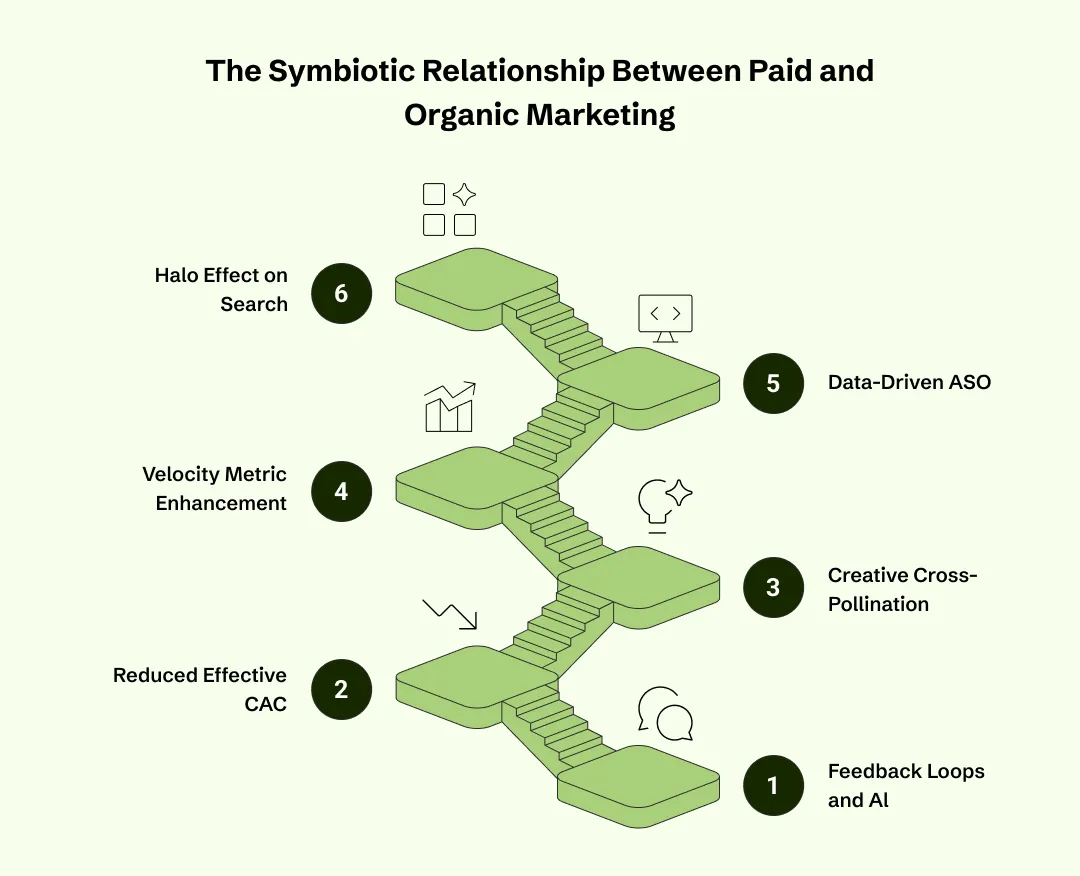
1. The "Halo Effect" on Search
When you ramp up paid advertising for mobile apps, your brand searches increase. People see an ad, don't click it, but then go to the App Store later and search for you. That’s a "paid" win that shows up in your "organic" column.
2. Using Paid Data to Refine ASO
Your paid ads are the world's best laboratory. If "Speedy Grocery Delivery" gets a 10% higher CTR in your ads than "Organic Food Shop," you should immediately update your organic app store title. This is paid vs organic marketing working in perfect harmony.
3. Boosting the "Velocity" Metric
App store algorithms are suckers for momentum. A concentrated burst of paid traffic can push you into the "Top Charts" or "Trending" sections, which then triggers a massive wave of "free" organic downloads.
4. Creative Cross-Pollination
Take your best-performing organic social posts and turn them into paid ads. Conversely, take the top-performing "hook" from a paid ad and make it your main app store screenshot. It’s about doubling down on what the data says is working.
5. Lowering the "Effective CAC"
When you combine both, your "Blended CAC" (Total Spend / Total Installs) drops. Your expensive paid users are subsidized by the "free" organic users they helped attract through social sharing and word-of-mouth.
6. Feedback Loops and AI Analysis
Use AI in marketing to track the "Attribution Path." Did they see an organic TikTok, then a paid Instagram ad, then search for you on Google? Understanding this path helps you spend your next dollar where it actually matters.
Measuring Success in 2026: Beyond the Install
If you're still bragging about 100k downloads, you're living in 2016. In the current era of Mobile App Marketing, we care about the "Long Game."
1. Focus on LTV (Lifetime Value)
How much money does a user bring in before they delete the app? If your paid vs organic marketing efforts bring in users who spend $0 and leave after a day, you're just burning cash. LTV is the only metric that guarantees survival.
2. ROAS (Return on Ad Spend)
This is the "Gold Standard" for paid advertising for mobile apps. If you spend $1 on ads, you should be getting at least $2 or $3 back in revenue. If your ROAS is below 1, it’s time to pivot your creative or your targeting.
3. The Retention Curve (Day 1, 7, and 30)
This tells you the "brutal truth" about your product. If your retention curve drops off a cliff after Day 1, no amount of organic app growth tactics will save you. You don't have a marketing problem; you have a product-market fit problem.
4. K-Factor (Virality)
How many new users does each existing user bring in? A K-Factor of 1.0 means every user brings in one friend. If you can get this above 1.0, your app will grow exponentially without you spending another dime on ads.
5. Engagement Rate and Session Length
Are they actually using the app? High engagement is a signal to the app stores that your app is "High Quality," which helps your organic ranking. It’s the ultimate KPI for best marketing for mobile apps because it proves value.
6. Sentiment Analysis via AI
Use AI in marketing to scan your reviews and social mentions for "sentiment." Are people happy? Are they frustrated with a specific bug? Addressing these issues quickly is a form of marketing in itself, as it prevents "churn" and protects your reputation.
Conclusion
At the end of the day, the paid vs organic marketing debate is a bit of a distraction. In the wild world of 2026, a "siloed" approach is a recipe for a ghost-town app. The real winners are the ones who build a sturdy organic foundation and use paid ads as a tactical strike to scale.
So, what’s your move? Are you going to keep grinding the organic path alone, or are you ready to mix in some high-octane paid growth? The most successful Mobile App Marketing is a hybrid—a living, breathing system that evolves with your users. If you aren't playing both sides, you're leaving growth on the table.
Frequently Asked Questions
How can we differ between paid and organic marketing of mobile apps?
The question of paid vs organic marketing of mobile apps is reduced to time and cost. Organic is based on finding it through search and word-of-mouth, and creating trust in the long term. Targeted ads are employed through paid marketing to ensure instant visibility, and thus, you can scale up user acquisition.
Why is a paid vs organic app marketing strategy important in 2026?
A balanced paid vs organic app marketing strategy is crucial because organic builds credibility while paid drives volume. Without organic, your ads feel "salesy." Without paid, you might never get the initial momentum needed to rank in crowded stores.
How does AI in marketing affect my mobile app growth?
AI in marketing has totally shifted the game. It automates ad targeting, predicts which users are likely to churn, and even helps with "LLM SEO," making your app more discoverable to AI-driven search bots and personalized app store recommendations.
How much does it cost to advertise today via mobile apps?
Advertising on mobile apps is an outrageously expensive field that depends on the niche, but in 2026, the cost per install (CPI) worldwide will be between around 1.50 and 3.00. Much higher costs can be witnessed in high-competition industries such as finance or gaming.
What are the best organic mobile app marketing strategies?
An ideal combination of ASO, creator-led UGC (User Generated Content), and community building is the best organic mobile app marketing. Nothing is more effective in promoting sustainable and long-term growth than concentrating on high-intent keywords and persuading real users to leave reviews.

Uncover executable insights, extensive research, and expert opinions in one place.
Related Content