











MobileAppDaily spotlights five top app development companies with global delivery capabilities, enhancing vendor discovery and helping businesses find reliable tech partners worldwide.
Rankings Updated : September, 2026

MobileAppDaily’s curated list of 2100+ mobile app development companies is designed to take the guesswork out of hiring. Backed by deep-dive reviews and a 4.9 satisfaction score, we list verified agencies with hourly rates ranging from $25–$300 and minimum project requirements of $1,000+.
To identify the top mobile app development companies, our editorial team conducts detailed market research and evaluates multiple performance indicators. Factors such as service expertise, client reviews, successful project delivery, innovation, and industry reputation are carefully analyzed to highlight companies that consistently deliver real business impact.
About
Clicktake technologies stands out as a mobile app development agency with deep technical capabilities. They partner with businesses of all sizes to deliver scalable iOS and Android app development solutions, with particular strength in Telecommunications, ECommerce, Consumer Products & Services. [View Clicktake technologies]
About
With a strong footprint in Retail, ECommerce, Consumer Products & Services, Odyssey New Media positions itself as a versatile mobile app development company. They assist businesses of all sizes by engineering robust iOS and Android app development solutions that align with business goals. [View Odyssey New Media]
About
With a strong footprint in Travel & Tourism, Real Estate, Automotive, Nile Technology | Web Design Company in Dubai, UAE positions itself as a versatile mobile app development company. They assist businesses of all sizes by engineering robust iOS and Android app development solutions that align with business goals. [View Nile Technology | Web Design Company in Dubai, UAE]
About
Catering primarily to businesses of all sizes within the ECommerce, Education, Health Care, Wellness & Medical sectors, Utilizor operates as a full-service mobile app development agency. Their team focuses on creating scalable digital products, with specific expertise in iOS and Android app development, helping clients navigate the mobile landscape. [View Utilizor]
About
Catering primarily to businesses of all sizes within the Information Technology, Advertising & Marketing, Health Care, Wellness & Medical sectors, Phoenix Pixels operates as a full-service mobile app development agency. Their team focuses on creating scalable digital products, with specific expertise in iOS and Android app development, helping clients navigate the mobile landscape. [View Phoenix Pixels]
Your Perfect Project Partner Is
Just A Few Steps Away!
About
Focused on quality and innovation, Nablasol Inc offers comprehensive mobile app development services. This agency specializes in iOS and Android app development, serving businesses of all sizes in Financial Services, Information Technology, Legal with cutting-edge mobile solutions. [View Nablasol Inc]
About
Korah Limited provides end-to-end mobile app development services with a focus on user-centric design. Specializing in iOS and Android app development, they serve businesses of all sizes across Government, Real Estate, Information Technology, creating apps that deliver measurable business value. [View Korah Limited]
About
BLP Webtech Management Services is recognized for delivering end-to-end app development services, tailored for businesses of all sizes. Specializing in iOS and Android app development, this mobile app development company works extensively in industries like Travel & Tourism, Dental, ECommerce, building solutions designed to meet specific market demands. [View BLP Webtech Management Services]
About
Apriorit is a mobile app development company that partners with businesses of all sizes to build digital products. Focusing on sectors such as Financial Services, Automotive, Health Care, Wellness & Medical, the firm delivers custom app development services tailored to business goals. Leveraging their technical expertise in iOS and Android app development, they deliver customized solutions that enhance digital presence and improve ROI. [View Apriorit]
About
Serving businesses of all sizes across diverse Dental, Health Care, Wellness & Medical, Advertising & Marketing, the app developers at ThePlanetSoft deliver expertise in the form of innovative products. They empower clients to achieve digital transformation by offering high-quality iOS and Android app development solutions. [View ThePlanetSoft]
About
With a strong footprint in Education, Non-Profit, Information Technology, ImageX positions itself as a versatile mobile app development company. They assist businesses of all sizes by engineering robust iOS and Android app development solutions that align with business goals. [View ImageX]
About
Driven by efficiency and performance, Redstage delivers full-cycle iOS and Android app development. Their app developers serve businesses of all sizes, solving the pain points of multiple industries like Consumer Products & Services, Real Estate, Retail, thanks to their strong technical expertise. [View Redstage]
About
ModLogix by Langate is a mobile app development company committed to delivering innovative digital solutions. With expertise in iOS and Android app development, they work closely with SMEs across Health Care, Wellness & Medical, Financial Services, Information Technology to create applications that drive business growth. [View ModLogix by Langate]
About
Infysion Technologies is a mobile app development company committed to delivering innovative digital solutions. With expertise in iOS and Android app development, they work closely with businesses of all sizes across ECommerce, Financial Services, Retail to create applications that drive business growth. [View Infysion Technologies]
About
SGV SoftTech is a mobile app development company committed to delivering innovative digital solutions. With expertise in iOS and Android app development, they work closely with businesses of all sizes across ECommerce, Education, Information Technology to create applications that drive business growth. [View SGV SoftTech]
Tell Us What You’re Looking For
Buying Guide
The mobile ecosystem doesn’t shift in neat waves; it moves in bursts. Some technologies are already reshaping product roadmaps, while others are still finding their footing. What follows isn’t trend-hype — it reflects areas backed by measurable growth.
AI is no longer a special feature. It’s closer to a foundational layer now. A useful reference point: Grand View Research valued the global AI market at USD 390.91 billion in 2025, expecting a 30.6% CAGR from 2026 to 2033. That pace only happens when enterprises are buying aggressively, not speculating.
Most mobile teams now use AI in very specific ways, ranking content, detecting fraud, predicting behaviour, improving support workflows, and interpreting images or video. Apps in media, retail, travel, and finance often report stronger engagement once these systems replace older rules-based logic.
The main differentiator today is implementation. Many vendors talk about AI; fewer have the engineering depth to deploy it responsibly.
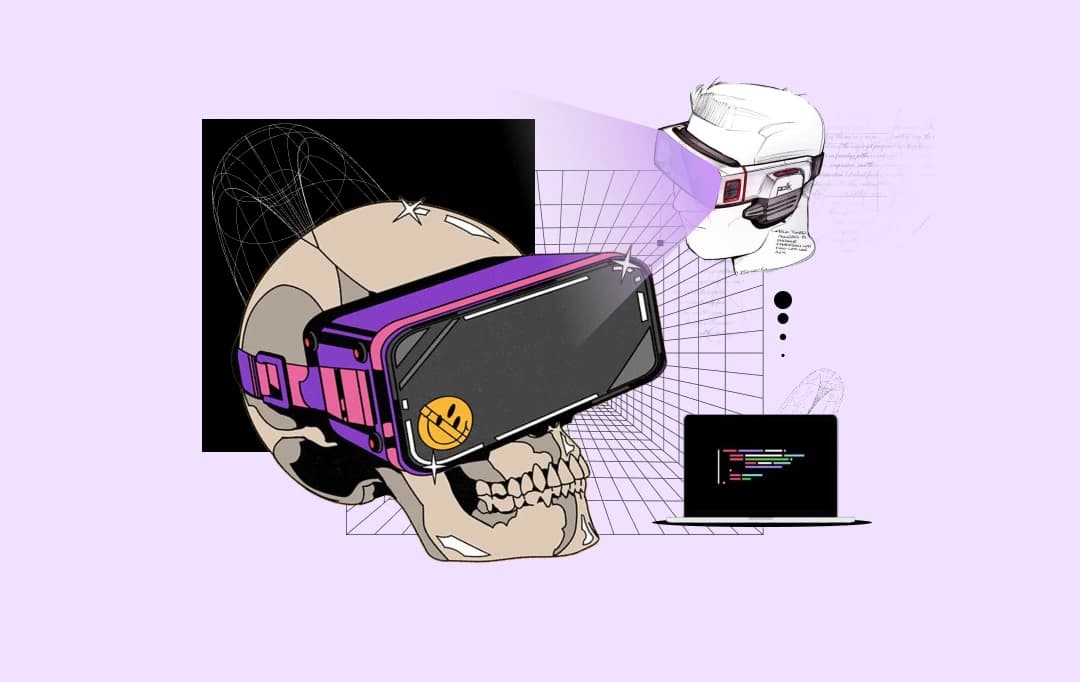
AR adoption has outpaced VR in business settings. Retailers use it for product previews; field teams use it for training; logistics uses it for equipment guidance and route assistance.
The numbers reflect this shift: Grand View Research places the AR market at USD 120.21 billion in 2025 and projects it to reach USD 1,050.56 billion by 2033. As a result, the app development industry is being propelled by continuous breakthroughs in both augmented reality devices and their underlying software ecosystems.
Interestingly, many companies are pairing AR with AI systems, especially for recognition and guidance tasks.
While 5G availability remains geographically uneven, its presence fundamentally transforms app performance. According to Statista-backed industry analyses, there were 2.9 billion 5G mobile subscriptions worldwide in 2025 that will eventually reach an estimated 6.80 billion by the end of the decade.
5G dramatically cuts latency by using a wider, more efficient wireless spectrum, reducing the 'lag' between a command and a response to near-zero. This instant connectivity is the backbone for real-time AR, multiplayer gaming, and remote diagnostic tools. Developers are now building for these 5G speeds while ensuring apps remain reliable on 4G fallbacks.
Cost Guide

Ask the “why” behind their tech stack recommendation. Ask how they build for scalability, security, and versioning. Check their process for changes, delays, bugs, and hand-offs. Request stories of projects that resemble yours—what went wrong, how they fixed it.
Some actual questions that can help are:
Why Trust
Press Releases in the Spotlight
MobileAppDaily spotlights five top app development companies with global delivery capabilities, enhancing vendor discovery and helping businesses find reliable tech partners worldwide.

MobileAppDaily improves vendor discovery through its directories, offering enterprises a more streamlined, transparent approach to selecting app and software development partners.

The platform outlines its evaluation-first approach as enterprises demand clearer standards in how technology vendors are featured and compared.

MobileAppDaily Insights: AI Will Kill 70% of Business Apps by 2027 (Here's Which Ones Will Survive) | Bizz Impact - Times Now

MobileAppDaily's report details how AI is moving beyond simple automation to power operational AI, quantum computing, and ethical frameworks.

From Zero to Unicorn: MobileAppDaily Reveals Shocking Truth About What Makes Apps Go Viral

Tech Review Platform Shares the Secret Sauce Behind Their Rating System That’s Trusted by a Large Chunk of App Users Worldwide.
Showcase Your Services In Our Directories
MobileAppDaily’s Knowledge Hub