- 1. Similarweb for Actionable Market Intelligence
- 2. Sprout Social: Tap Into Market Sentiment
- 3. Ahrefs: Reverse-Engineering Search Authority
- 4. Semrush: The Ultimate Marketing Command Center
- 5. Owletter: Decoding the Competitor’s Inbox
- 6. Owler: Tracking Hard-to-find Corporate Signals
- 7. Earnest Analytics: Measuring Actual Transaction Power
- 8. Morning Consult: Quantifying Public Brand Perception
- 9. Wappalyzer: Identifying the Digital Infrastructure
- 10. HypeAuditor: Verifying Influencer ROI
 Share It On:
 Guessing what your audience wants can majorly limit your content's potential. The tools mentioned here help you leverage competitive data to find proven topics, essential to building a strategy that isn’t based on guesswork.
Crowded markets often have top players, but what exactly makes them stand out? It’s easy to assume they just have a larger budget or a more creative team, but the reality is usually more calculated. They are doing it because they have mapped the digital battlefield better than you have. They know where the audience's attention is, and they are actively stepping into the spaces you have left wide open.
The frustration of playing catch-up usually comes from focusing on outcomes instead of processes. That’s where competitive analysis in digital marketing changes the equation. It helps you unpack a competitor’s digital footprint, uncover high-intent keywords to identify backlink gaps, and turn scattered insights into actionable direction.
This guide breaks down how to stop being a spectator and start using competitor data with the right tools to fuel your own strategic growth.
Digital Marketing Competitor Analysis Tools
Digital marketing trends are always changing. To keep up and move from theory to execution, you need tools that simplify how you track trends and competitors, analyze performance, and identify opportunities.
We have come up with a list of competitive analysis tools, which are essential for conducting digital marketing competitive analysis efficiently and consistently. Let’s check them out below.
1. Similarweb for Actionable Market Intelligence
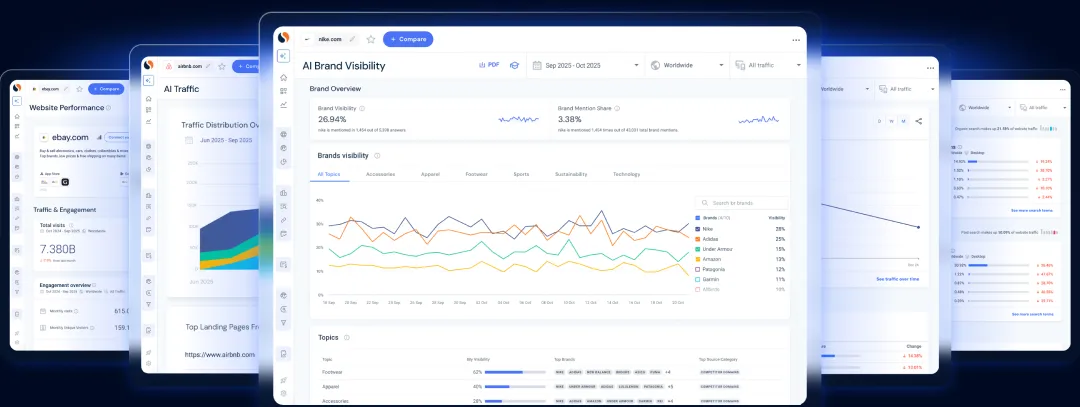
Similarweb acts as a high-powered telescope for the digital landscape. While most tools guess at traffic, Similarweb uses a massive data panel to provide highly accurate estimates of a competitor’s total visits, bounce rates, and average session durations. It allows you to see the referral path, as in exactly which websites are sending traffic to your rivals and which specific pages are their money makers.
In 2026, it has expanded to include AI-driven search visibility, helping you see how competitors are appearing in AI-generated search summaries. By using its "Market Intelligence" features, you can benchmark an entire industry to see if your niche is growing or shrinking, ensuring you don't just beat your competitor, but win in a stable, growing market.
Thus, Similarweb helps you delve into deeper market analysis for digital marketing.

2. Sprout Social: Tap Into Market Sentiment
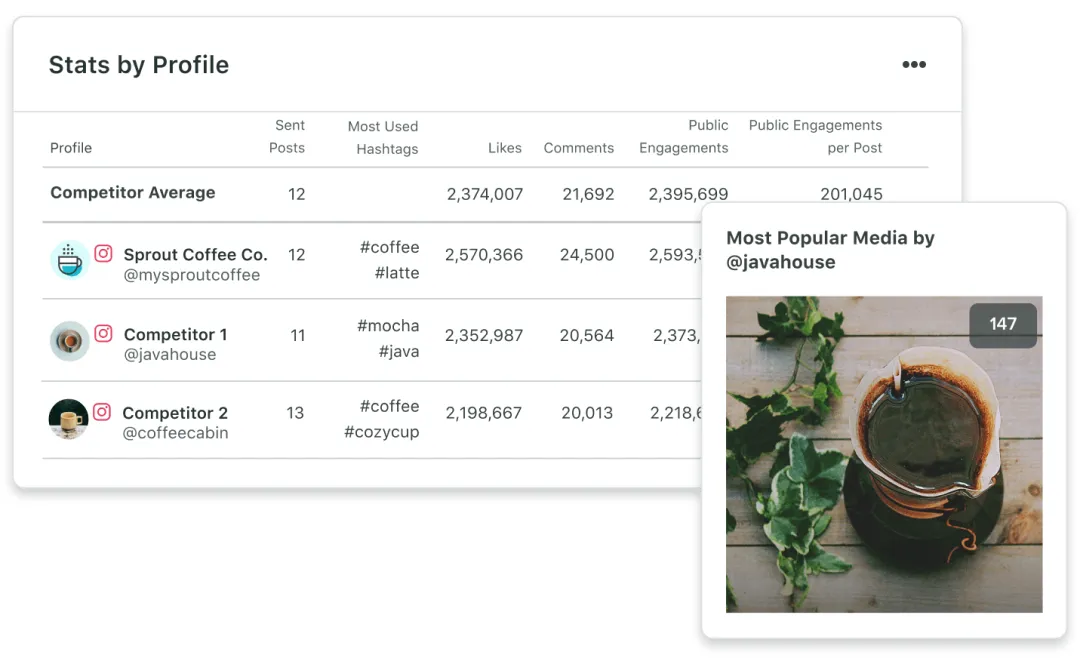
Sprout Social is much more than a scheduling tool; it is your "ears” on the ground. The tool’s social listening capabilities allow you to track mentions of your competitors across platforms like X, LinkedIn, and Instagram. More importantly, it uses AI for Sentiment Analysis. This tells you if the conversation around a rival's new product launch is genuinely positive or if it’s riddled with customer frustration and bugs.
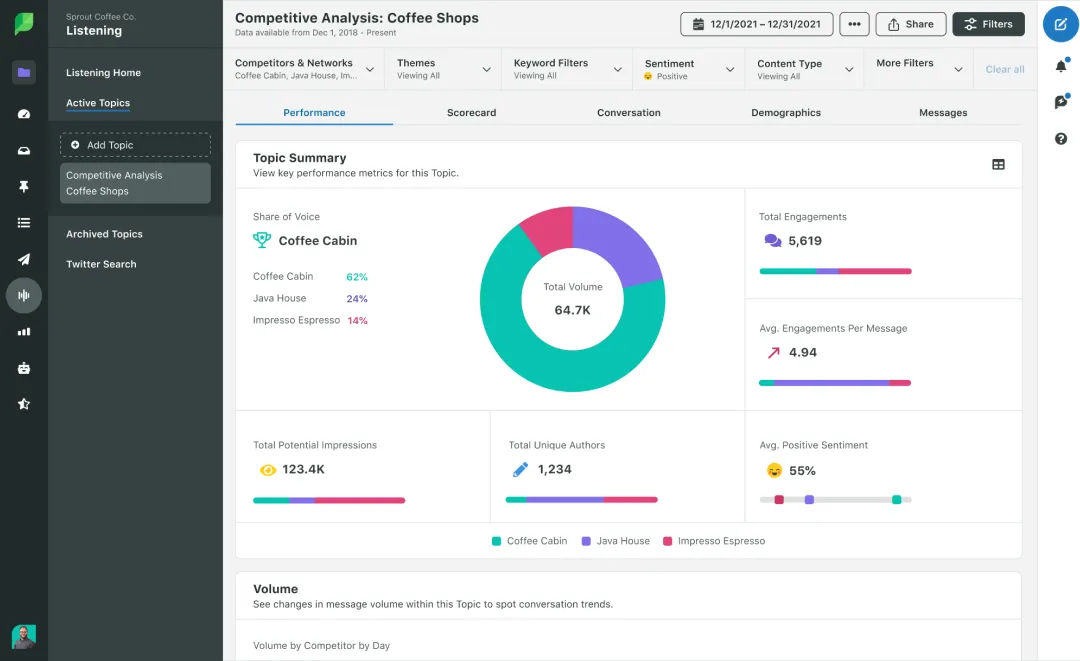
By setting up Listen Topics for your competitors, you can identify the White Space they’ve left behind. If you notice a recurring complaint about a competitor’s customer service or a missing feature in their software, you can pivot your own messaging to highlight that you solve that specific problem. It turns social media noise into a clear roadmap for your next ad campaign.
3. Ahrefs: Reverse-Engineering Search Authority
Ahrefs is one of the most widely used digital marketing competitor analysis tools for SEO. It can be considered the industry gold standard for figuring out why your competitors rank higher than you on Google.
The tool’s core strength lies in its Site Explorer, which reveals every single backlink that your competitor has earned. Since Google views these links as votes of confidence, knowing who favors your rivals gives you a direct list of people to contact for your own content.
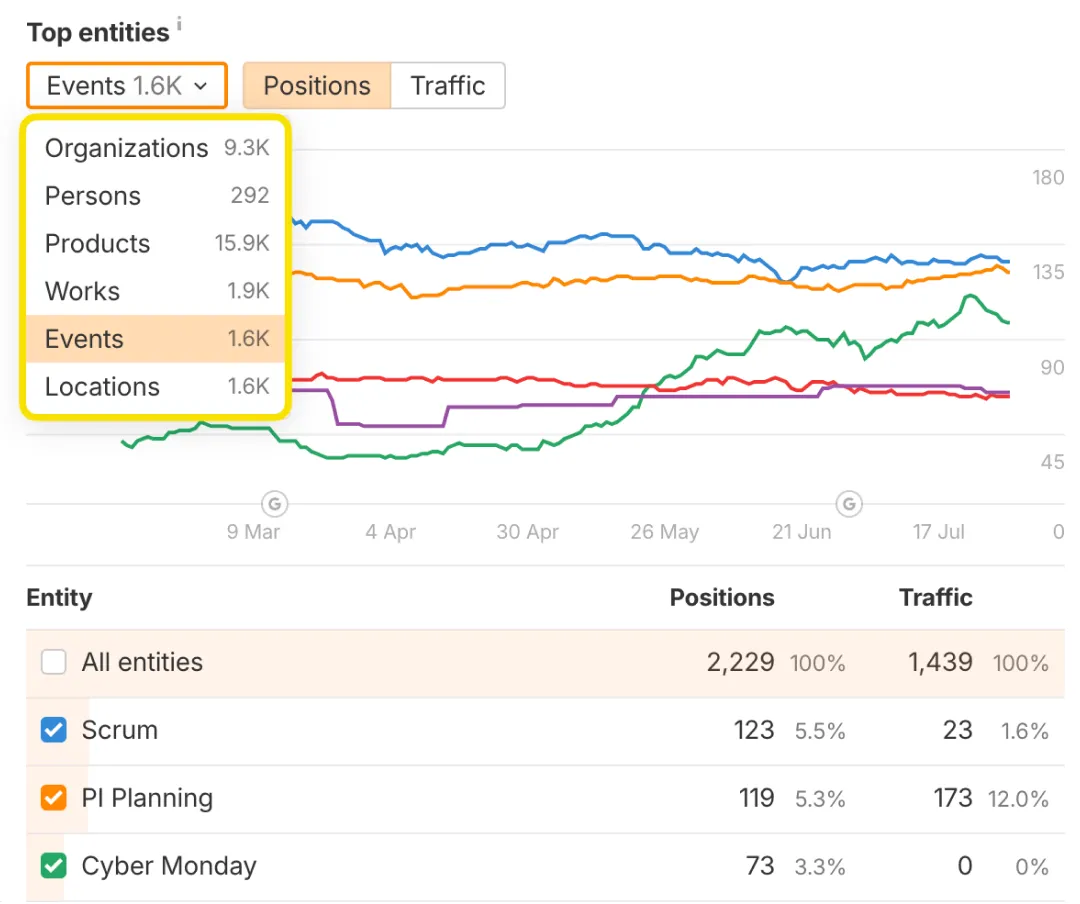
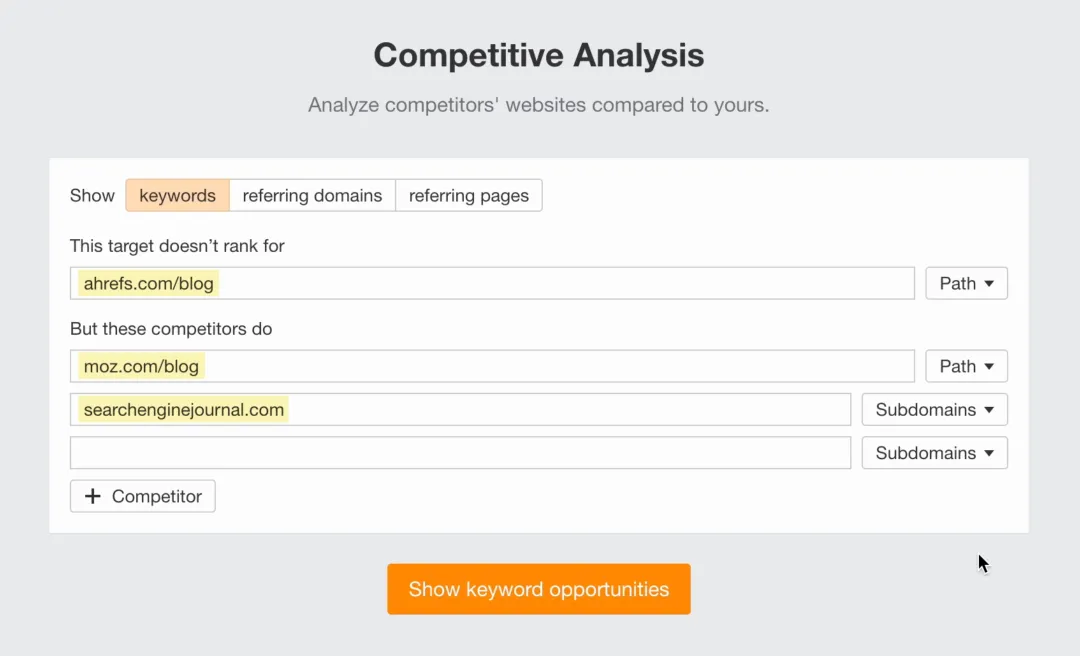
The Content Gap tool is quite popular for performing competitive content analysis. It allows you to input three competitors and see the exact keywords they all rank for that you currently don't. This effectively writes your content calendar for you, highlighting the high-intent topics you need to cover to stop losing potential customers to your rivals in the search results.
4. Semrush: The Ultimate Marketing Command Center
If you only have a budget for one tool, or want to find something that does it all, SemRush is usually it. It covers SEO, Paid Search (PPC), Social Media, and Content Marketing in a single dashboard. Its standout feature for competitive analysis is the Advertising Research tool. It allows you to see the exact ad copy your competitors are using in their Google Ads and how much they are likely spending on specific keywords.
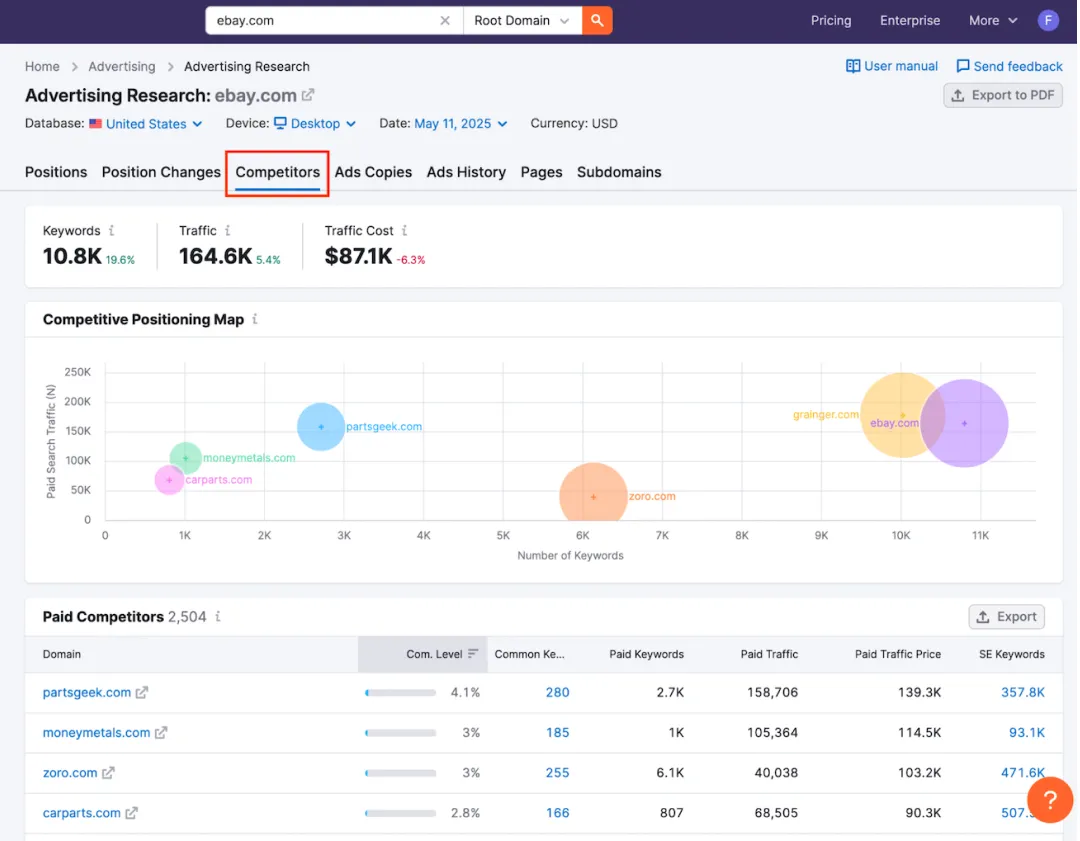
For a marketing team, this is invaluable because it lets you see which hooks and calls to action are working for your competitors without you having to spend extra resources on testing. You can also use features like Position Tracking to get daily updates on how your rankings compare to theirs, allowing you to react instantly if a competitor starts climbing for a high-value search term.
Overall, Semrush proves to be quite useful for tracking changes over time, making your competitor analysis in digital marketing more consistent and scalable.
5. Owletter: Decoding the Competitor’s Inbox
Email is often a "black box" because you can’t see what’s happening in a competitor’s private communications. Yet, email marketing remains a crucial part of the competitor analysis process.
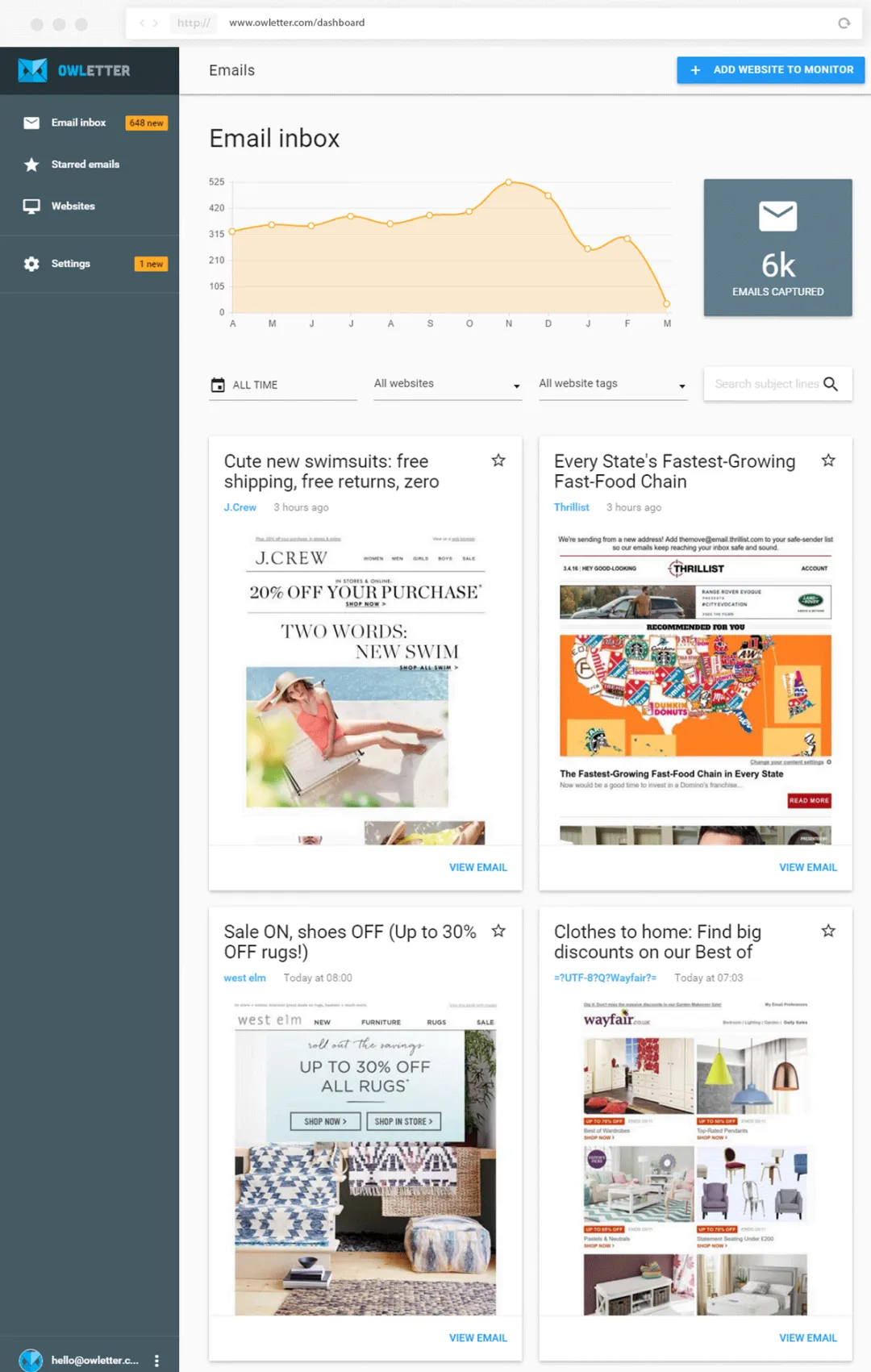
Owletter solves this by automatically subscribing to your competitors' newsletters, capturing every email, and storing them in a searchable database. It analyzes their sending frequency, the specific days of the week they promote sales, and even the "spam score" of their subject lines.
This prevents your own inbox from being cluttered while giving your team a visual timeline of a competitor’s promotional strategy. If you see them consistently offering an "End of Quarter" discount in the last week of September, you can plan your own "Early Bird" special for the second week of September to capture those leads first. It’s about timing as much as it is about the offer.
Overall, this tool helps you decode the best practices for email marketing, such as focusing on the timing, which is just as important as focusing on the content.
6. Owler: Tracking Hard-to-find Corporate Signals
Owler is a community-powered business intelligence platform that is perfect for startups or lean marketing teams. It provides a Competitive Graph that identifies not just your direct competitors, but also "emerging threats" you might not have noticed yet. It tracks private company data that is usually hard to find, such as estimated annual revenue, recent funding rounds, and leadership changes.
The real value of Owler is its Instant Alerts. If a competitor gets mentioned in the news, changes their CEO, or acquires a smaller company, you get a notification immediately.
This high-level business data helps you understand the strength of the companies you are fighting against. It moves the conversation beyond just clicks and views and into the actual business health of your rivals, and supports a more complete market analysis for digital marketing.
7. Earnest Analytics: Measuring Actual Transaction Power
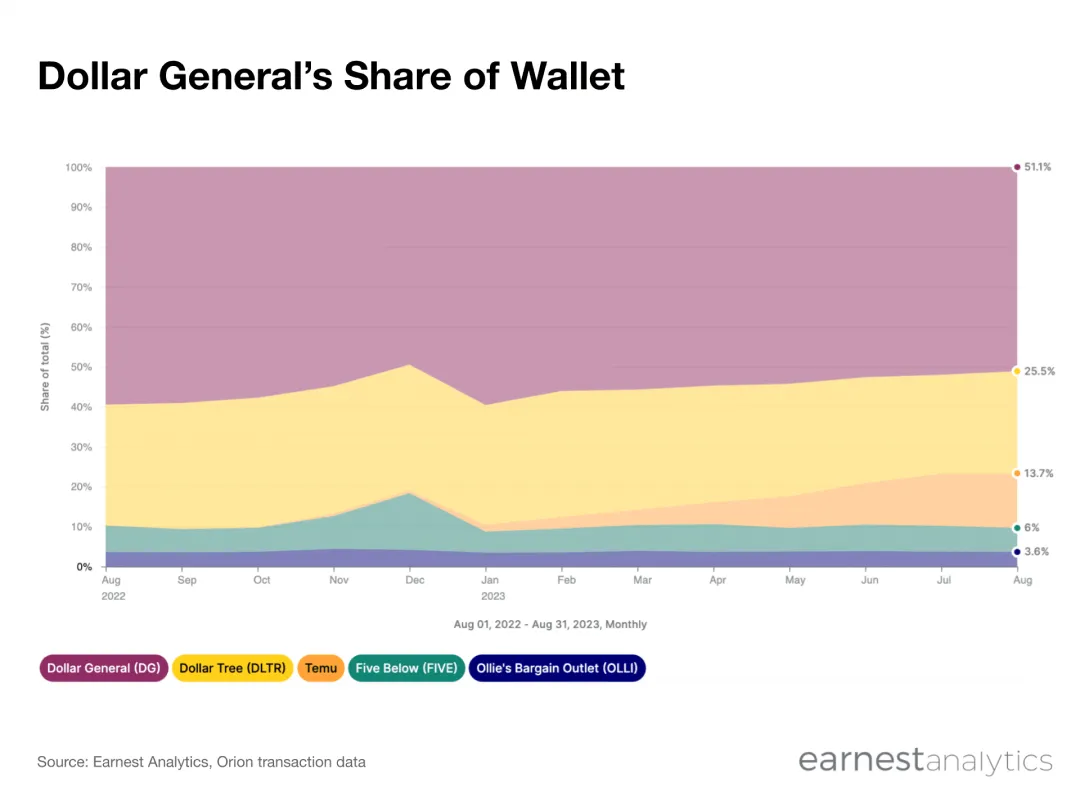
Earnest Analytics provides the "ground truth" that marketing metrics often hide. It uses anonymized credit card and transaction data to show where consumers are actually swiping their cards. For a product-based company, this is the ultimate way to verify if a competitor's success is leading to real revenue or if it’s just social media hype.
By looking at Share of Wallet reports, you can see if customers are spending more with you over time or if they are slowly shifting their budget toward a newer, more aggressive competitor.
It is particularly powerful for identifying seasonal spending shifts in your industry, allowing you to allocate your marketing budget to the specific months where your audience is historically most likely to actually buy. Access to this information strengthens your competitor analysis in digital marketing with real-world performance data.
8. Morning Consult: Quantifying Public Brand Perception
Morning Consult adds a perception layer to digital marketing competitor analysis, helping you measure trust, favorability, and brand sentiment across audiences. They conduct thousands of interviews daily across global markets to measure Brand Intelligence. This helps you understand deep metrics like Favorability, Trust, and Purchase Consideration for both your brand and your competitors.
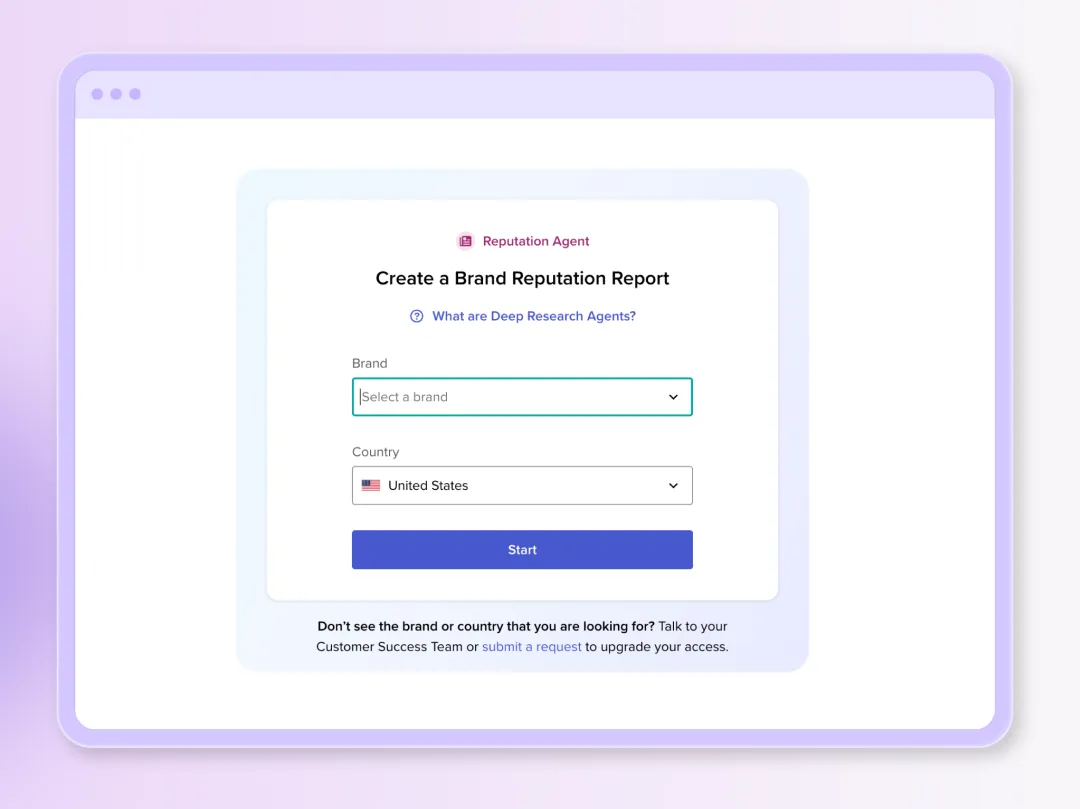
If a competitor releases a "copycat" product and gets called out on social media, Morning Consult allows you to see the actual damage to their brand reputation. You can use this data to see if their Trust Score is dropping among your core demographic, providing a perfect window for you to launch a campaign that positions you as the more stable, original alternative.
Once you’ve identified these perception gaps, the next step is translating them into actionable growth moves. Here are some marketing strategies that can help you do exactly that.
9. Wappalyzer: Identifying the Digital Infrastructure
Wappalyzer is a technographic tool that tells you how a website functions, for instance, what its underlying integrations are. With one click, you can see which CMS (like WordPress or Webflow) a competitor is using, their payment processors (Stripe vs. PayPal), their analytics tools, and even their CRM.
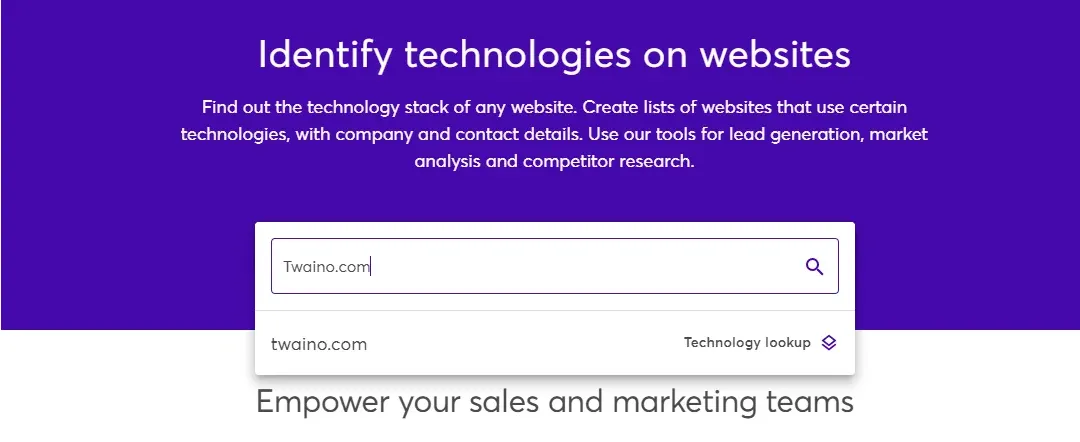
For tech-heavy industries, this is a goldmine. If you see a competitor suddenly install a sophisticated new Lead Generation bot or a specialized SEO plugin, you can infer that they are about to make a big push in that area. It allows you to stay technically competitive; if all your top rivals have switched to a faster hosting platform or a specific AI-chat tool, you know it’s time for your team to investigate an upgrade to keep your site performance at the same level.
10. HypeAuditor: Verifying Influencer ROI
Influencer marketing is a major part of the modern digital mix, but it’s easy to be fooled by "vanity metrics" like high follower counts. HypeAuditor uses AI to audit any influencer a competitor is working with. It identifies fake followers, tracks audience demographics (age, gender, location), and calculates the Audience Quality Score.
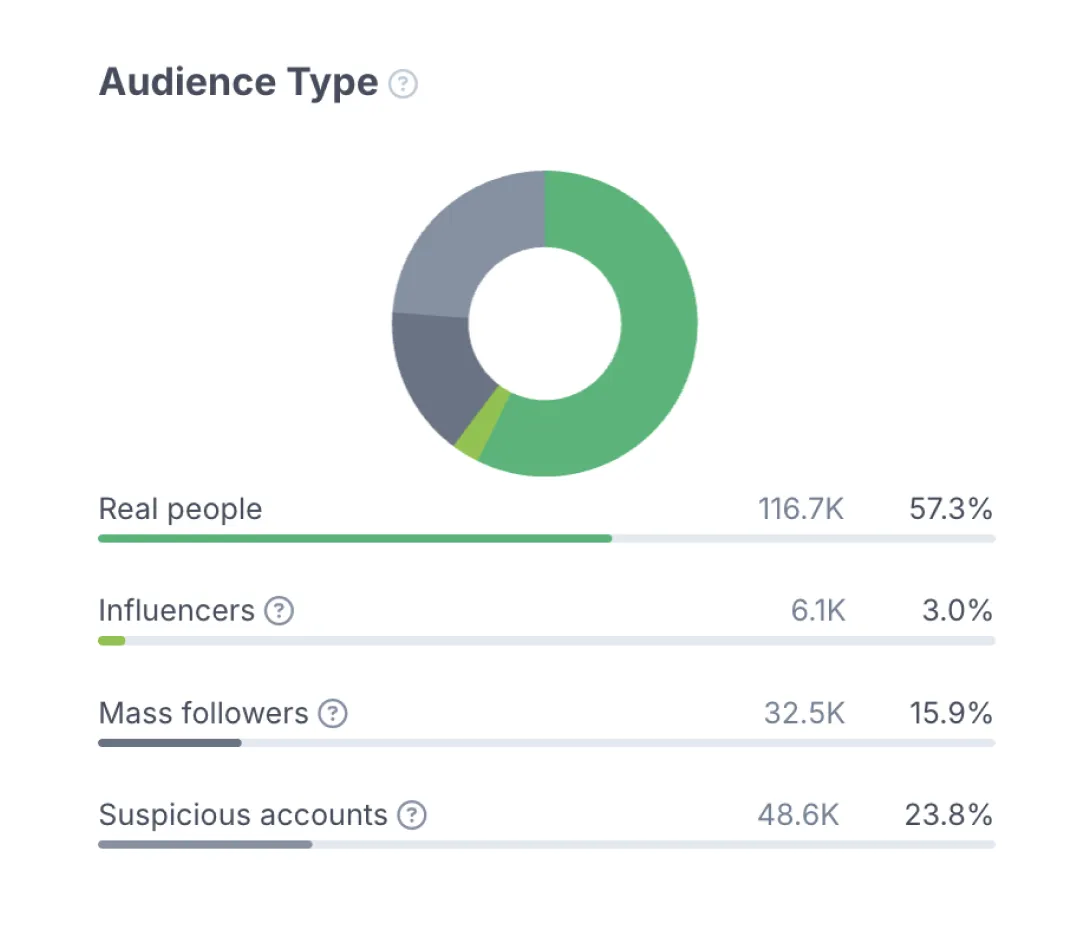
If you see a competitor running a massive campaign with a specific set of influencers, you can use HypeAuditor to see if those influencers actually have a real, engaged audience. This data-driven approach allows you to optimize your own influencer strategy with greater confidence and precision.
What Factors Affect Competitor Analysis in Digital Marketing?
Competitor analysis goes far beyond simply tracking what others are posting. It is a structured process that involves identifying, monitoring, and evaluating the strategies competitors use to attract, convert, and retain customers.
However, when you’re assessing competitor analysis tools, the approach shifts slightly. Instead of just analyzing competitors, you need to evaluate how effectively these tools help you uncover meaningful insights and support decision-making.
This is where defining the right evaluation criteria becomes essential. The following factors help you assess competitor analysis tools based on their ability to deliver accurate, actionable, and scalable insights.
1. Traffic Sources
This is a key step in understanding how to analyze your competitors' digital marketing efforts effectively. You want to see if they are winning through organic search or if they are heavily reliant on paid ads. It shows you where to spend your time. If they get all their customers from search, you know you need to improve your SEO. If they rely on ads, you might find a way to reach those same people for free with better content.
2. Content Strategy
Figure out what topics they cover, and what format seems to resonate most with their followers, to incorporate the same into your content strategy. If your competitor's video on "How to save money" has thousands of views, you know that "saving money" is a topic your customers want to hear about. It also gives you direction regarding which of the content assets you should focus on. For e.g., blogs, videos, or whitepapers.
3. Customer Journey
Map out how they move a stranger from a landing page to a "Buy" button. Doing this allows you to learn from their mistakes. If their checkout process is long or confusing, you can win over frustrated customers by making your own experience much shorter and simpler.
4. Market Share
Look at who is currently dominating the "share of voice" for your most important industry keywords. This identifies the biggest players in your niche and sets a clear reference point so you can track whether your brand is actually growing or just standing still. This ties directly into market analysis for digital marketing, helping you understand your position within the broader competitive landscape.
Conclusion: Turning Insights into Competitive Intelligence With the Right Tools
At its core, competitive analysis in digital marketing does not consist of following competitors but it is more about honing your own decision-making. The brands that constantly thrive are not responding to the superficial trends; they are following the trends, gaps, and changes in the behavior of the audience that others are not following.
When you start using the right tools, as mentioned above, a clearer picture begins to form. You can see where attention is moving, what messages are hitting the nail on the head and where the competitors are either over-investing or completely missing. And that is when you start seeing the true benefits of competitor analysis in digital marketing.
This process, over time, lessens into a one-time exercise and rather it is a continuous feedback loop. The more you critically analyze, the more quickly you will adapt, refine your strategy and be a step ahead and not always playing in a catch-up mode.
Frequently Asked Questions
What is competitive analysis in digital marketing?
Digital marketing competitive analysis is an activity that involves examining the online marketing policies of your competitors, how they are using SEO, content, advertisement, and customer experience to identify their weaknesses, strengths, and growth opportunities in order to boost your own brand.
Why is competitor analysis important for SEO?
Competitor analysis can assist you in increasing SEO in various ways, such as:
- Determines keyword gaps that your competitors are already ranking well.
- Unravels backlink potentials to boost your domain authority.
- Picks out performing content themes and formats.
- Assists you in knowing the search purpose that your audience is acting on.
- Allows more intelligent prioritizing of SEO work to make faster wins.
How often should you perform a competitive analysis?
Competitive analysis is a good practice, particularly when done on a daily basis in the marketing field as trends evolve at a very rapid rate. It is also possible to track such important indicators as rankings, advertisement, and social activity on a monthly basis to have an overview of the market. This will ensure that you keep pace with the industry trends and expectations of the customers.
Which tools are best for digital marketing competitor analysis?
Such tools as Similarweb, Ahrefs, Semrush, and Sprout Social are popular as they are able to answer a certain portion of the puzzle. Similarweb provides you with the general picture of traffic sources and market share, allowing you to compare performance accordingly.
Ahrefs and Semrush go further into SEO and find out the gaps in the keywords, the backlink analysis, as well as the competitor advertising approaches. Meanwhile, Sprout Social will allow you to know what people are feeling, not just what they are clicking by monitoring conversations and sentiment of social sites.
How do you identify your real competitors online?
Rather than just looking at your direct business competitors, begin the analysis of who is getting search results on your target keywords. These are the companies that are attracting the eyes of your audience at the discovery level. Also, you can examine who is bidding on your core keywords in paid ads and what brands are also actively working with the same audience segments on social media.
In most of the situations, you will see content-driven competitors, marketplaces or even niche blogs competing with you as far as visibility is concerned, and as such, they are equally important to monitor.
What metrics should you focus on during competitor analysis?
The most useful metrics are the ones that connect visibility to actual business impact. Organic traffic and keyword rankings show how discoverable a competitor is, while backlink profiles indicate how much authority they’ve built over time. Engagement metrics, such as time on page or social interactions, help you understand how well their content resonates.
On the paid side, analyzing ad spend and messaging reveals where they’re investing for quick wins. Finally, looking at conversion paths and share of voice gives you a clearer picture of how effectively they’re turning attention into revenue, not just traffic.

Uncover executable insights, extensive research, and expert opinions in one place.
Related Content