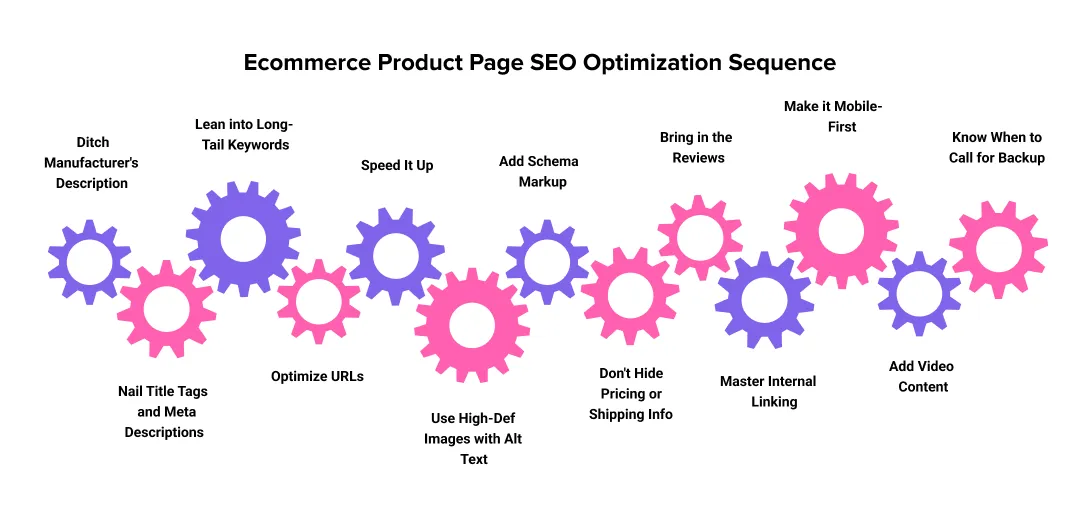
- 1. Ditch the Manufacturer's Description
- 2. Nail Your Title Tags and Meta Descriptions
- 3. Lean into Long-Tail Keywords
- 4. Optimize Your URLs
- 5. Speed It Up
- 6. Use High-Def Images with Alt Text
- 7. Add Schema Markup
- 8. Don't Hide Pricing or Shipping Info
- 9. Bring in the Reviews
- 10. Master Internal Linking
- 11. Make it Mobile-First
- 12. Add Video Content
- 13. Know When to Call for Backup
 Share It On:
 Turn window shoppers into buyers by mastering e-commerce SEO for product pages using these simple yet highly effective optimization strategies.
Getting traffic to your online store is only half the battle. You can pour money into ads and build a massive social media following, but if your product pages are a ghost town, all those flashy ecommerce marketing strategies won't mean a thing. The product page is the ultimate moment of truth. It's where window shoppers become paying customers.
If you want to stop leaving money on the table, you need to understand how to make search engines and human beings fall in love with your pages. Let's get into the nitty-gritty of making your store rank higher and convert better.
How To Optimize SEO for Ecommerce Product Pages
Here’s the deal with ecommerce product page optimization: it’s not just about stuffing keywords into a paragraph and hoping for the best. It’s a mix of technical tweaks, persuasive writing, and user experience. Here are 13 tried-and-true tips to get your pages ranking and banking.
1. Ditch the Manufacturer's Description
Stop copying boring supplier text. It guarantees you will blend in with hundreds of lazy competitors, and Google absolutely hates duplicate content. Instead, please take the time to write fresh, engaging copy. Highlight the real-world benefits and show exactly why this specific product is a total game-changer for your customers.
|
Do How the Big Players Do It! Partner with the top ecommerce marketing firms and optimize your pages with zero error. |
2. Nail Your Title Tags and Meta Descriptions
Your title tag is the very first impression you make on search engines. Keep it incredibly catchy, including your brand and top features. Treat your meta description like a rapid-fire sales pitch designed to hook scrollers, boosting your click-through rates and driving high-intent shoppers straight into your digital storefront today.
3. Lean into Long-Tail Keywords
Shoppers ready to spend money never use generic search terms. They look for highly specific items. To make more SEO friendly product descriptions, instead of targeting a broad word like shoes, optimize for red waterproof hiking boots. Weaving these precise phrases naturally into your text brings in serious buyers and dramatically improves your overall conversion rate instantly.
4. Optimize Your URLs
Keep your web links extremely clean, short, and easy to read. A messy URL stuffed with random numbers looks completely sketchy and hurts your search rankings. For SEO product pages, use straightforward text that clearly describes the actual product. This simple tweak makes indexing easier for Google and builds instant customer trust beautifully.
5. Speed It Up
Nobody has the patience for a sluggish website. If your product page takes forever to load, shoppers will instantly bounce to a competitor. You must compress those massive image files, clean up clunky code, and upgrade your hosting plan to ensure a lightning-fast, seamless browsing experience for every user. This will make your ecommerce product page SEO better, leading to leads that convert.

6. Use High-Def Images with Alt Text
Crisp photos act as your digital display window. Since shoppers cannot touch the items, high-quality visual elements are mandatory. However, search engine bots cannot truly see pictures. You must add descriptive alt text to every single image so algorithms understand exactly what you are selling and rank it accordingly.
7. Add Schema Markup
Structured data is the secret sauce for dominating search results. By adding schema markup code to your backend, you enable Google to display rich snippets like star ratings, pricing details, and inventory status right on the main results page. This grabs immediate attention and drastically boosts your overall click volume.
8. Don't Hide Pricing or Shipping Info
To achieve a winning ecommerce product page optimization, transparency is key. It builds real trust with your audience. If visitors have to hunt for product prices or suddenly discover massive hidden shipping fees during checkout, they will leave immediately. High bounce rates tell search engines your page is totally unhelpful, which ultimately ruins your chances of ranking well in the future.
9. Bring in the Reviews
Customer reviews are an absolute goldmine when we talk about SEO for ecommerce products. They provide the vital social proof needed to convince hesitant buyers while naturally sprinkling organic keywords throughout your entire page. This constant stream of fresh, user-generated content signals to search engines that your page is highly active, relevant, and worthy of top rankings.
10. Master Internal Linking
Help search engine crawlers easily map out your website by smartly connecting products to related categories. Creating a related items section significantly spreads link equity across your entire online store. It keeps users browsing far longer while cleverly encouraging them to spend more money during a single online shopping session.
11. Make it Mobile-First
The majority of all online shopping now happens on smartphones. If your page forces users to awkwardly pinch and zoom just to read simple text, you lose sales. A totally responsive, thumb-friendly mobile design is absolutely critical for both product page conversion optimization and satisfying strict modern search engine ranking rules.
12. Add Video Content
Embedding a quick, highly engaging product video keeps visitors locked on your page much longer. When people stick around to watch, it substantially increases your overall dwell time. Search engines view this extended engagement as a major quality signal, rewarding your informative product listing with a well-deserved ranking boost.
13. Know When to Call for Backup
Managing technical SEO issues alone often feels completely overwhelming for busy entrepreneurs. If fixing complex crawl errors becomes too frustrating, hire professional help. Partnering with seasoned digital marketing partners allows you to securely delegate backend website optimizations while you stay entirely focused on rapidly scaling your core retail business operations.
Conclusion
At the end of the day, chasing search engine algorithms shouldn't come at the expense of your human customers. You can have the fastest site in the world with perfectly optimized meta tags, but if the page lacks a pulse, you won't make sales.
On the flip side, a gorgeous, poetic product page won't do you any good if it's buried on page 10 of Google. You need visibility and persuasion. When figuring out your long-term strategy, remember that a hybrid of both could be the best way to go.
Blending smart, technical SEO with an unforgettable user experience is the ultimate recipe for ecommerce dominance. Keep testing, keep tweaking, and watch those conversion numbers climb.
Frequently Asked Questions
What is the main goal of SEO for ecommerce product pages?
It's all about driving high-intent traffic straight to your checkout line. You want to rank high on search engines so ready-to-buy shoppers find exactly what you're selling, boosting both your visibility and those sweet, sweet sales.
Does duplicate content hurt SEO for product pages?
Yes. Copying the manufacturer's exact text is a massive rookie mistake. Search engines ignore duplicate text, meaning your page won't rank. Always write fresh, unique descriptions to give your product a fighting chance to stand out.
What are the top product page SEO best practices?
Start by doing solid keyword research, writing unique copy, and optimizing your images with descriptive alt text. Don't forget to add structured data so you get those flashy rich snippets in search results, and always prioritize mobile speed!
How do I handle out-of-stock items for SEO product pages?
Don't just delete the page and ghost your customers! Leave it up, add an "email me when back in stock" button, and show related items. If it's permanently gone, use a 301 redirect to a highly relevant alternative product.
What are the top SEO tips for ecommerce product listings?
Focus on unique descriptions, high-quality images with alt text, and fast loading speeds. Proper ecommerce product page optimization means ditching manufacturer copy and using specific long-tail keywords that actual buyers search for to instantly boost visibility and drive massive conversions.
What is the best SEO strategy for product pages?
The ultimate strategy blends technical speed with killer user experience. Nail your on-page elements like title tags and schema markup, while writing highly persuasive copy. This dual approach to ecommerce page optimization guarantees you rank high and sell out.

Uncover executable insights, extensive research, and expert opinions in one place.
Related Content